
In industries ranging from electronics and aerospace to medical devices, high-performance engineering plastics like machined PEEK (Polyetheretherketone) and machined PPS (Polyphenylene Sulfide) have become essential thanks to their exceptional strength, chemical resistance, and dimensional stability. However, machining these materials—whether by milling, drilling, or turning—often leaves behind burrs, small and big, and particulate contamination that can compromise performance, aesthetics, and downstream processing.
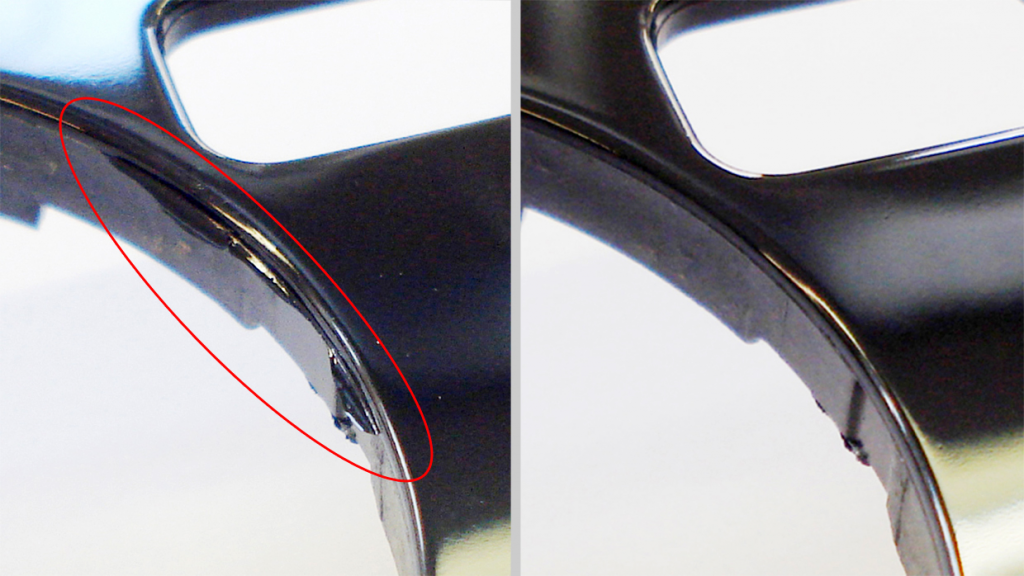
Traditional deburring methods such as manual scraping, abrasive tumbling, or cryogenic deflashing can be time-consuming, inconsistent, and in some cases, too aggressive, potentially damaging delicate features of the part. This is where CO₂ snow jet technology comes into play—offering a dry, precise, non-abrasive, and environmentally friendly solution for deburring PEEK and PPS components without any residue left behind.
How CO₂ Snow Jet Works on Machined PEEK Parts?
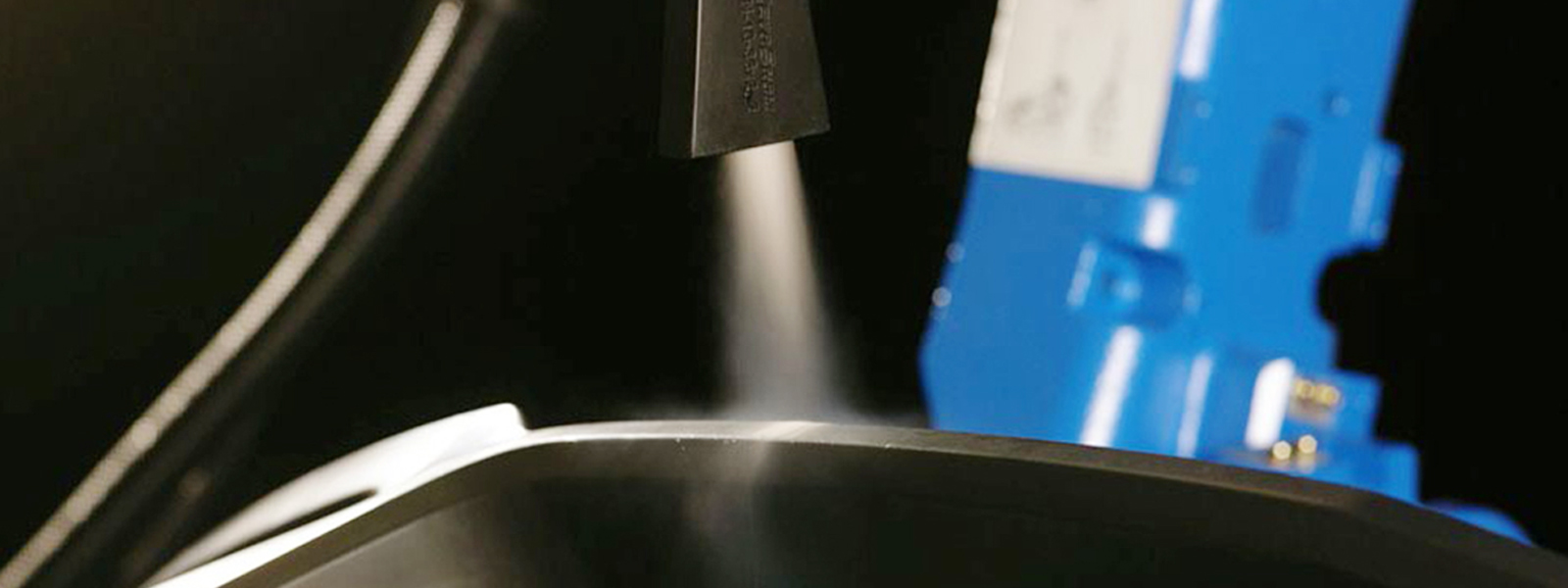
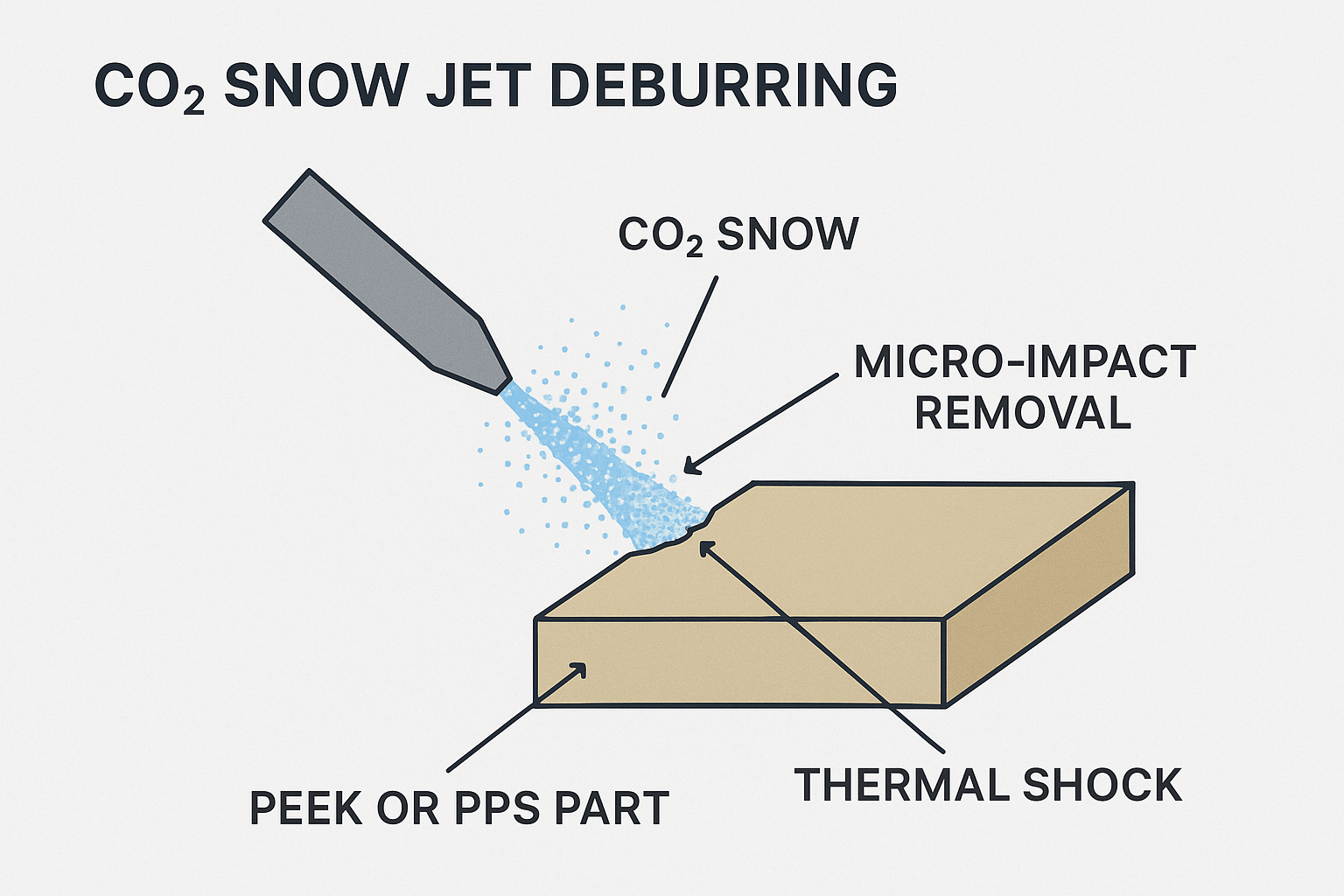
CO₂ snow jet cleaning uses liquid carbon dioxide stored under pressure. When released through a specially designed nozzle, the liquid expands into a mixture of fine CO₂ snow particles and gas at high velocity. The jet of snow impacts the part surface, and two cleaning mechanisms take place:
- Micro-Impact Removal – The solid CO₂ particles strike burrs and contaminants with enough momentum to dislodge them without damaging the base material.
- Thermal Shock – The extremely cold snow (around –78°C) causes burrs and debris to contract rapidly, breaking their adhesion to the surface.
- Sublimation Expansion – The CO2 snow transforms directly from solid to gaseous state without becoming a liquid and expands 600 times of its original size, thus removing any dirt and burr away from the part.
Because CO₂ sublimates directly into gas, it leaves no secondary waste, eliminating the need for water rinsing or drying steps. Check out our snow jet product line-up for more information on the capabilities of each machine.
Advantages for Machined PEEK and PPS Deburring
- Non-Abrasive Precision
Machined PEEK and PPS are strong, but precision-machined features—such as fine threads, micro-holes, or thin walls—can be damaged by traditional abrasive deburring. CO₂ snow jet removes burrs gently, preserving dimensional tolerances. - No Solvents or Residue
Many cleaning processes require chemicals that can swell or attack polymers. CO₂ snow is dry, residue-free, and chemically inert, making it safe for high-value components used in sensitive applications. - Microscopic Cleaning
In addition to burr removal, CO₂ snow jet can clean away fine particulates, machining dust, and oils—critical for ensuring strong adhesion in coatings, bonding, or medical sterilization. - Environmentally Friendly
The process uses recycled CO₂ from industrial byproducts, meaning no net increase in greenhouse gas emissions. It also avoids liquid waste streams and reduces cleaning consumables.
Applications
- Electronic Components – Modern high quality electronic devices have machined PEEK-like plastics filled inside cavities of aluminium body. Burr-free devices ensure longer life without chances of failure.
- Medical Devices – PEEK implants or surgical instruments benefit from burr-free surfaces that meet stringent biocompatibility standards.
- Aerospace Components – PPS electrical connectors and housings require clean, precise edges for proper fit and insulation.
- Semiconductor Equipment – Both materials are used in wafer handling and chemical processing parts, where cleanliness is paramount.
Implementation Considerations
While CO₂ snow jet deburring is highly effective, process parameters must be tuned to the specific geometry and material. Factors such as nozzle type, jet velocity, standoff distance, and exposure time influence the efficiency and consistency of burr removal. Automated systems with multi-axis control are often preferred for high-volume production, ensuring repeatability.
Conclusion
CO₂ snow jet technology offers a superior alternative for deburring PEEK and PPS parts, combining precision, cleanliness, and environmental responsibility. By replacing manual or abrasive processes, manufacturers can improve quality, reduce rework, and meet the demanding requirements of industries where these advanced polymers shine. Contact your Obtuz Representative today to know more about the suitability of your application for snow jet deburring